eng
Gift voucher
Puglia has more five star properties than it did ten years ago, and from a listing page they look interchangeable: old stone, olive trees, a pool. What separates them is not the photography but six or seven concrete things, and the fastest way to choose well is to know what those are before you start comparing. This guide sets them out.
In Puglia the five star category covers very different things: converted farmhouses known as masserie, purpose built seaside resorts, restored noble villas and historic estates. They share a rating and almost nothing else. The questions below are what separate them.
This is the decision that everything else follows from. The Itria Valley gives you the trulli and the white towns. The Salento gives you the beaches and Lecce. The Ionian side, around Taranto, gives you the archaeology and far fewer people.
A central position saves you hours. To take one measurable example, from the Relais Histò estate near Taranto it is 27 kilometres to Martina Franca, 33 to Locorotondo, 42 to Alberobello, 52 to Ostuni, 66 to Polignano a Mare, 90 to Matera and 101 to Lecce. Before you book anywhere, put your three must see places into a map and measure.
Ask this directly, because the answer is often flattened in marketing copy. A masseria is a fortified agricultural estate, and many luxury properties in Puglia are exactly that, restored well. Others are villas. A few are something else again.
The Relais Histò is in the third category: not a farmhouse converted into a hotel but a layered historic site, made of Greek quarry faces, a private Roman aqueduct explored for over 200 metres and listed among the geosites of the Puglia Region, rock cut caves, a basilica and a fortified estate, all on a hill above the Mar Piccolo lagoon. The first part opened in 2008 after a long restoration. Two decisions from that restoration tell you what kind of place it is: the cloister was lowered so that it would not stand taller than the basilica, and the number of rooms was reduced below what had been authorised, to keep the site quiet.
Ask for the floor area and for what a treatment path actually includes, because the range is wide.
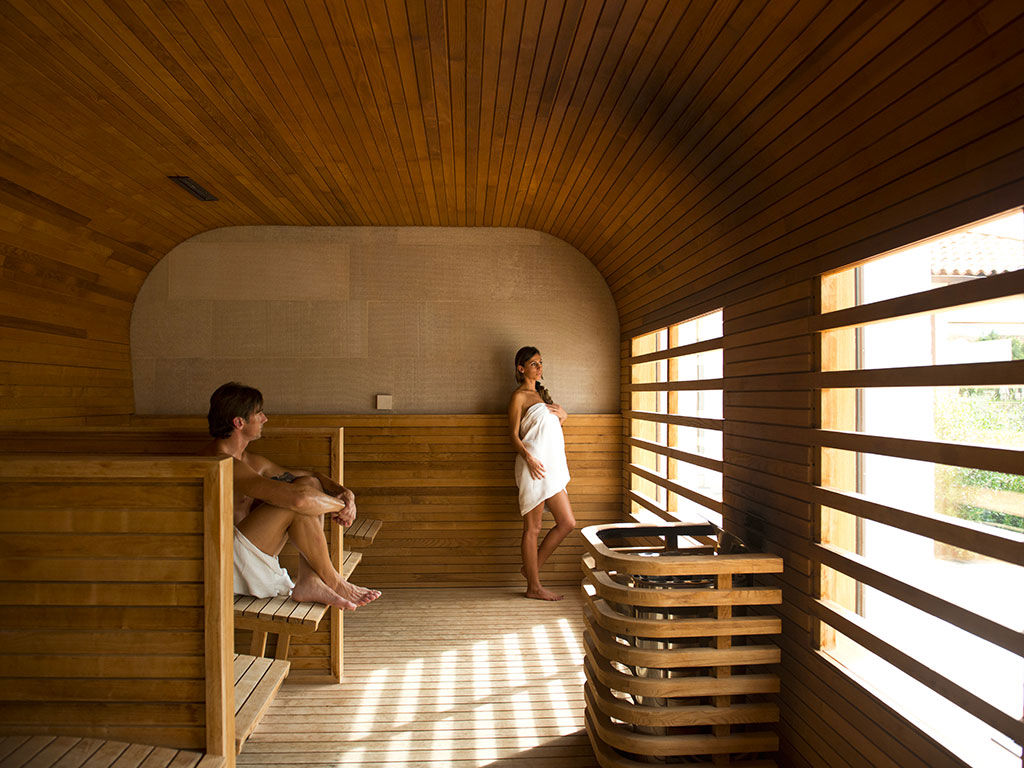
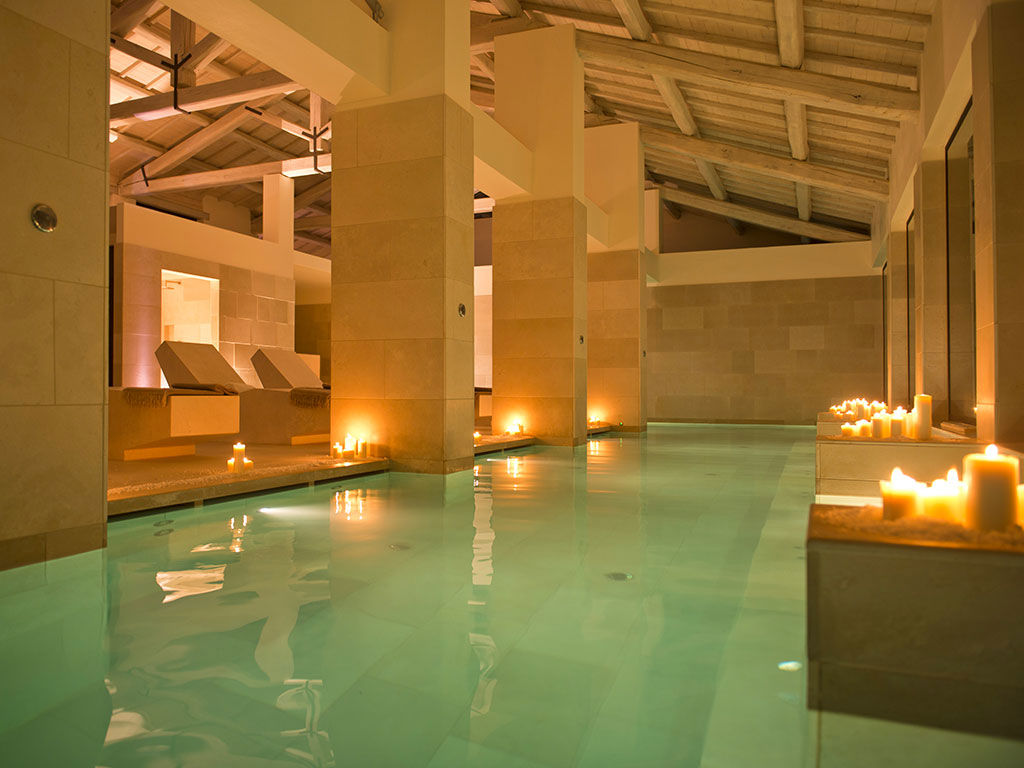
The spa at the Relais Histò covers 1,750 square metres, built where the old sheepfold and the shepherd's quarters stood. The Roman Baths path runs 100 minutes and moves through a sauna in thermal wood and bush hammered stone, a steam room, an impluvium with jets at the nape of the neck, a saltwater pool rich in magnesium and potassium, a heated open air spring and a fire grotto housed in a trullo. There is also a shorter path of 70 minutes, and a set of rituals of 75 to 110 minutes.
This one question tells you more about a property than any description of the restaurant. Ask whether there is a kitchen garden, and what share of the produce it covers.
At the Relais Histò the estate garden supplies roughly 90% of what the kitchen needs. The olive oil comes from the property's own centuries old groves, where 9000 new trees have been planted, and the seafood comes from the Mar Piccolo. At La Lanternaia, which looks onto the lantern lit cloister it takes its name from, the dish that says most about the place is tubettini with Mar Piccolo mussels.
On a seven night stay you will spend several days on the property. Ask what is actually available there, not in the region generally.
Further ideas within reach are collected on our page about what to do near Taranto.
A large share of Puglia's luxury properties close for the winter. If you are travelling between November and March, confirm not only that the hotel is open but that the spa and the restaurant are too.
The Relais Histò is open all year. Some spaces are seasonal: the panoramic sea view terrace, for instance, is available from April to October.
The five star hotel and spa near Taranto answers each of these on its own page, and the rooms and suites are described one by one.
A masseria is a fortified agricultural estate, historically a working farm. A layered historic estate can include a masseria alongside older structures such as quarries, an aqueduct, caves or a basilica, so its history runs much further back than its farming period.
It depends on what you want. The Itria Valley suits trulli and white towns, the Salento suits beaches and Lecce, and the Ionian side around Taranto suits archaeology, quiet and a central position for day trips.
Many close for the season. Check the property specifically, and confirm that the spa and the restaurant are open as well. The Relais Histò is open all year.
Ask for the floor area and the content of a full treatment path. At the Relais Histò the spa covers 1,750 square metres and the Roman Baths path lasts 100 minutes, moving through sauna, steam room, impluvium, saltwater pool, open air spring and fire grotto.
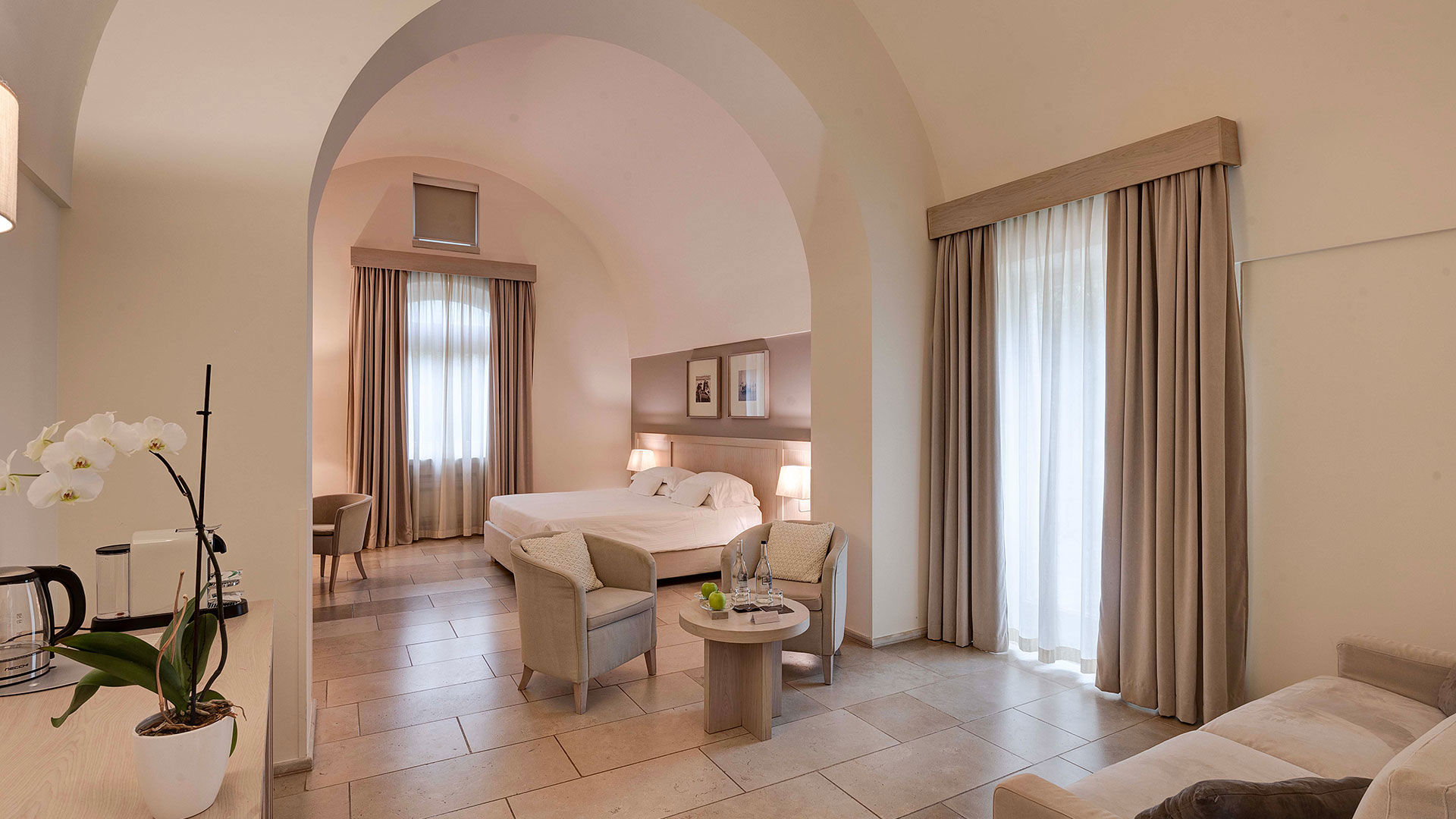
Sizes vary widely. The Relais Histò has 48 rooms and suites for up to 130 guests, spread between the old building and the cloister.
Criteria narrow the list. The place itself decides. Browse our stay offers and pick the season you want to see Puglia in.