eng
Gift voucher
Taranto sits in the southern corner of Puglia, stretched between two bodies of water: the open Mar Grande and the enclosed lagoon of the Mar Piccolo. It was a Greek city before it was a Roman one, and its archaeological museum holds one of the most important collections of Magna Graecia goldwork anywhere. Most visitors to Puglia never make it here, which is exactly why it rewards those who do.
The name is literal. On one side lies the Mar Grande, open to the Gulf of Taranto. On the other lies the Mar Piccolo, a lagoon closed behind the city and connected to the gulf by a navigable canal. The old town sits on the strip of land between them, which is why arriving in Taranto feels less like reaching a coastal town and more like crossing water twice.
This position also explains the city's history. Taranto was founded as Taras by Greek settlers and became one of the leading cities of Magna Graecia, the Greek south of Italy, long before Rome arrived. Later it sat where West met East: as late as the sixteenth century, churches in the area still held services in both the Roman and the Greek rite.
The National Archaeological Museum of Taranto, known as the MArTA, is the single strongest reason to come. It holds one of the most important collections of Magna Graecia goldwork in existence: diadems, earrings and funerary jewellery worked with a delicacy that is hard to reconcile with their age.
Give it a full morning. Seeing the gold first also changes how the rest of the city reads, because what looks like an ordinary southern Italian port turns out to have been one of the wealthiest cities in the Greek world.
The Aragonese Castle stands over the navigable canal that separates the old town from the newer districts. It is still in the custody of the Italian Navy, and visits are guided by Navy personnel, which gives the tour a character no ordinary monument has.
The old town itself is small enough to cross on foot and is best seen slowly, in the late afternoon, when the light comes off both seas at once.
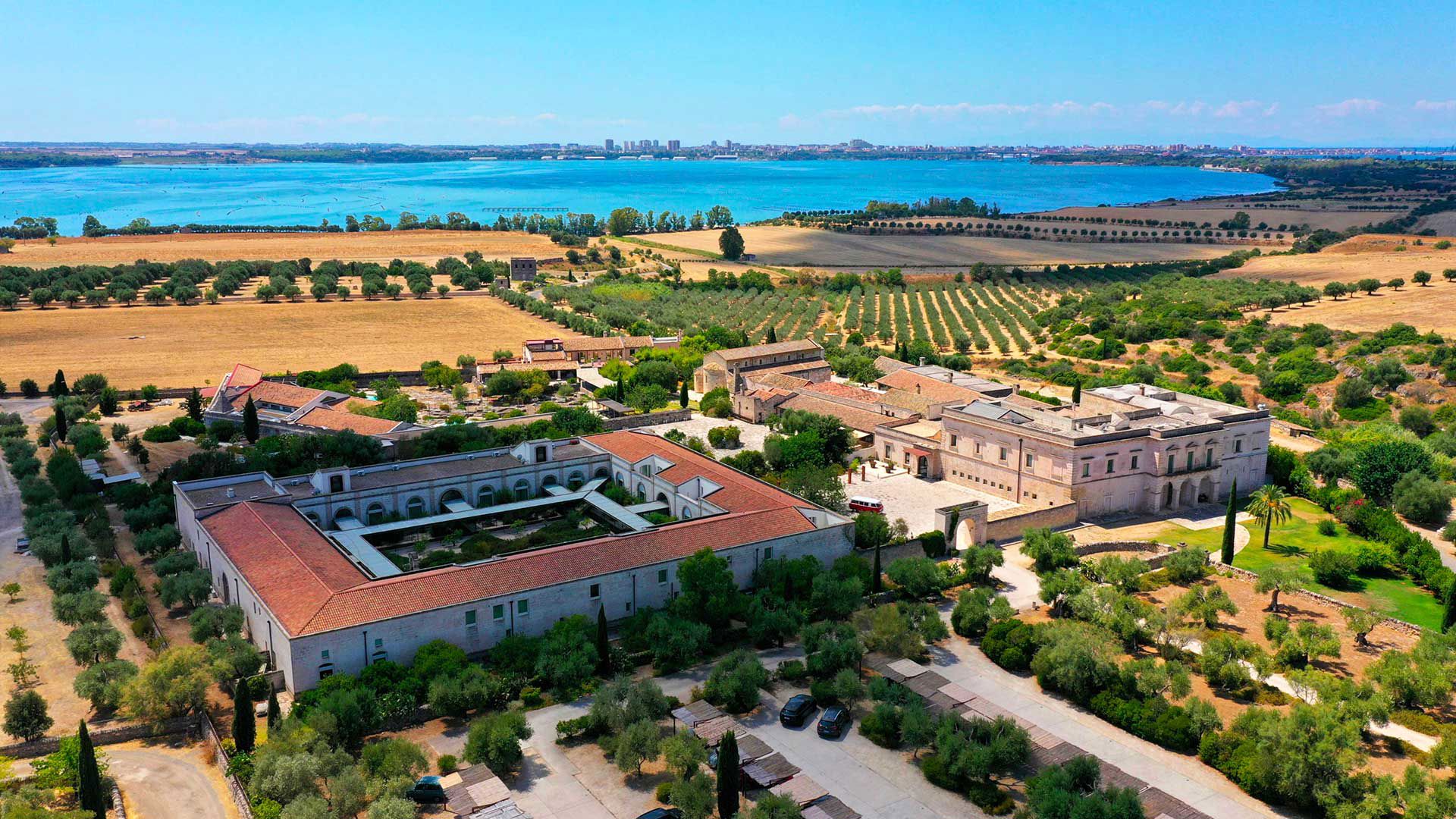
The Mar Piccolo is the part of Taranto that visitors rarely reach and the part that stays with them. It is a lagoon fed by 34 citri, freshwater springs that rise from the seabed, and it has been a regional park since 2020. Its water is calm, and its shores are lined with olive groves, kitchen gardens and old droving tracks.
The hill above the lagoon where the Relais Histò estate stands is made of calcarenite formed more than 300,000 years ago. Around 140,000 years ago the sea reached 28 metres above its present level, a line that today corresponds to the estate's perimeter wall. Greek quarry faces are still visible on the site, and according to the archaeologist Silvia De Vitis the stone cut here supplied the building works of the walls and acropolis of Taras. Beneath the ground runs a private Roman aqueduct, more than two thousand years old, explored by speleologists for over 200 metres and listed among the geosites of the Puglia Region.
Local tradition holds that the apostle Peter came ashore here on his way to Rome. It is a legend, but it is the legend that gave the place its name, San Pietro sul Mar Piccolo.
Taranto's cooking comes straight out of the lagoon. Mussels from the Mar Piccolo are the local ingredient, and the dish to look for is tubettini with mussels: short pasta cooked in the mussel liquor with cherry tomatoes, garlic, parsley and Puglian extra virgin olive oil. It is simple, intensely flavoured and completely of this place.
Beyond the lagoon, the wider area gives you mozzarella and burrata pulled at dawn in the dairies, extra virgin olive oil from centuries old groves, and Primitivo and Negroamaro from cellars carved into the soft local stone, where the temperature stays constant all year. At the La Lanternaia restaurant the kitchen works almost entirely with produce that grows within a few kilometres.
Taranto sits at the centre of Puglia, which makes it an unusually practical base.
From the water, a half day catamaran cruise takes you along the coast with the old town and the Aragonese Castle seen from the angle they were designed for. A resident population of dolphins lives in the Gulf of Taranto. More ideas are collected on our page about what to do near Taranto.
The nearest international airports are Brindisi, 68 kilometres away, and Bari, 120 kilometres. Grottaglie, 14 kilometres from the estate, handles private flights. A car is the most practical way to move around the region, although airport shuttles and private transfers can be arranged.
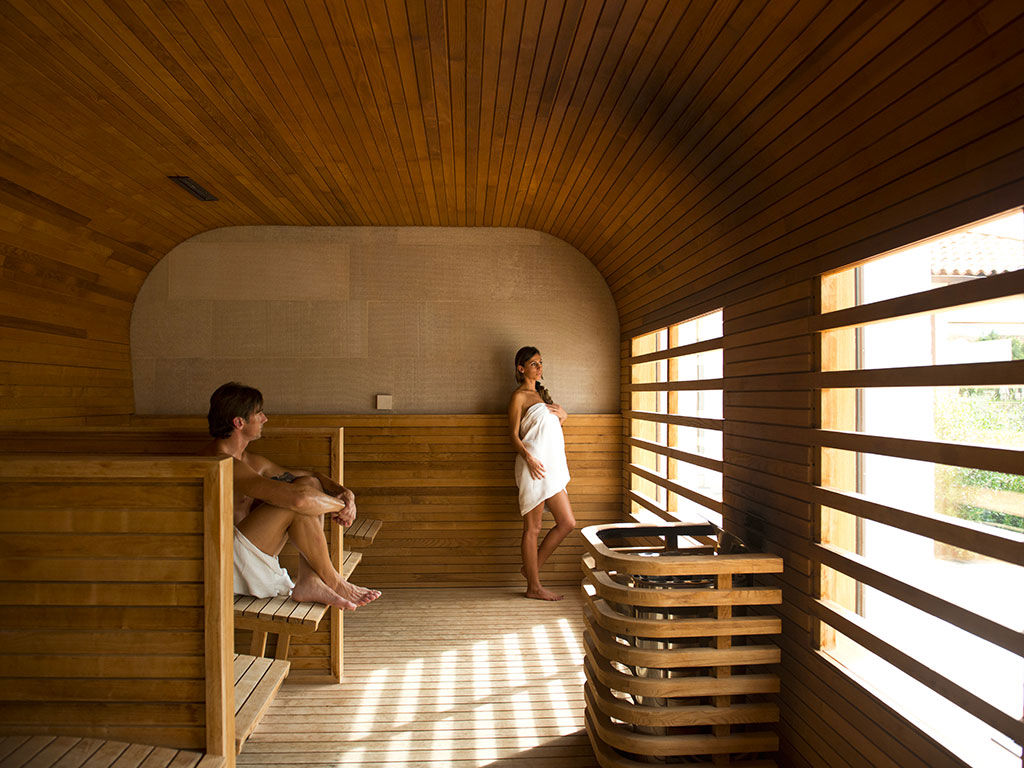
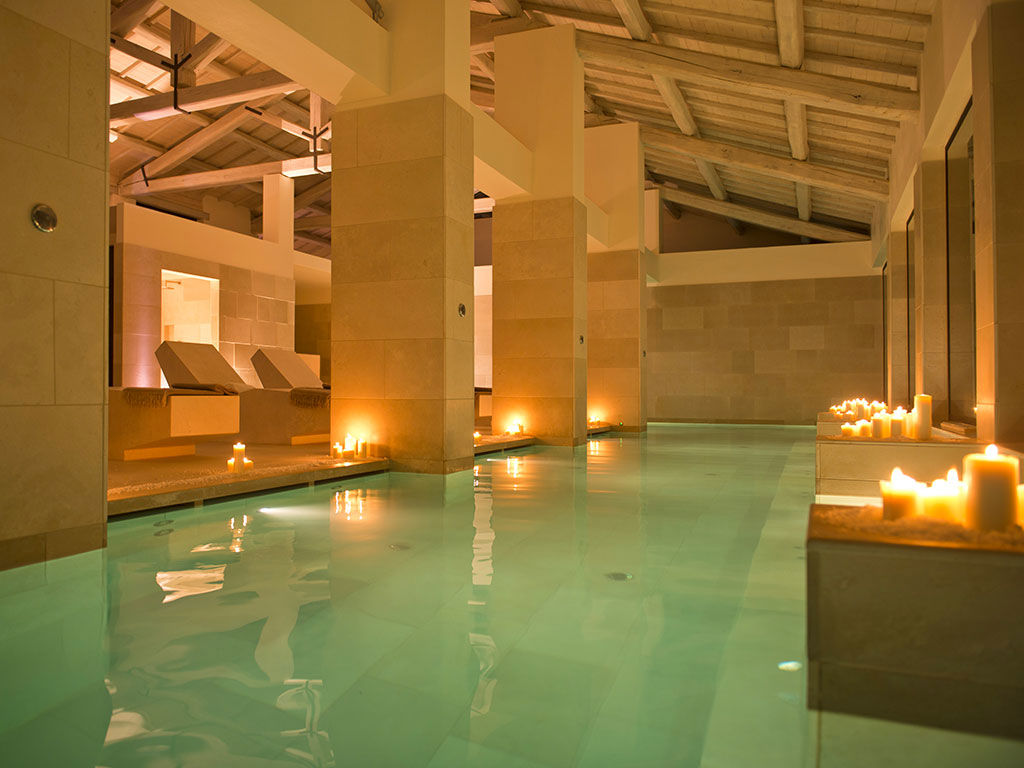
Staying in the city and staying on the lagoon are two different holidays. The Relais Histò is one of very few properties that look directly onto the Mar Piccolo, set in an estate of 150 hectares of centuries old olive groves, gardens and old droving tracks, 14 kilometres from Taranto. It is not a farmhouse converted into a hotel but a layered historic complex of Greek quarries, a Roman aqueduct, caves, a basilica and a fortified estate, brought back through a long restoration. Its rooms and suites sit between the old building and the cloister, and the spa occupies 1,750 square metres.
Yes, particularly for the MArTA archaeological museum and its Magna Graecia gold, for the old town and the Aragonese Castle, and for the Mar Piccolo lagoon. It is also a practical base for the rest of Puglia.
Because it lies between the Mar Grande, open to the Gulf of Taranto, and the Mar Piccolo, an enclosed lagoon connected to the gulf by a navigable canal.
It holds one of the most important collections of Magna Graecia goldwork, including jewellery from the Greek period of the city, when Taranto was known as Taras.
Yes. The castle is still in the custody of the Italian Navy and is visited with Navy personnel as guides.
A full day covers the MArTA, the old town and the castle. Two or three days allow you to add the Mar Piccolo and day trips to the Itria Valley, Grottaglie or Lecce.
Brindisi, 68 kilometres away, followed by Bari at 120 kilometres. Grottaglie, 14 kilometres away, handles private flights.
The city reads differently when you wake up facing the water it was built around. Browse our stay offers and choose the season you want to see it in.