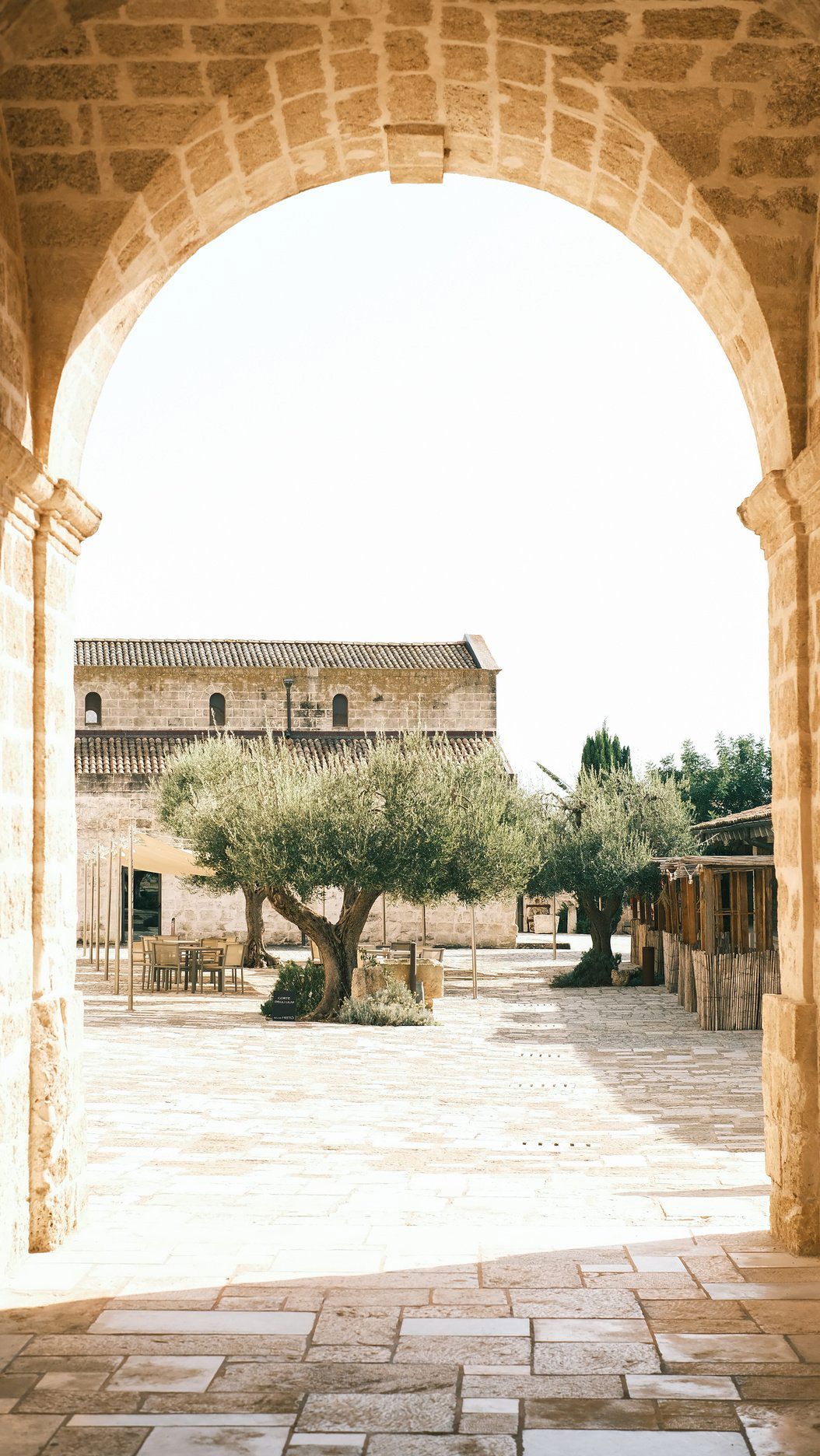
A masseria is a fortified farm estate of southern Italy, and above all of Puglia: a group of stone buildings where landowners, farm workers, animals, harvests and the oil press all lived inside the same walls. Many have been restored as places to stay, which is why the word now appears in so many hotel names. This guide explains what the word means, where masserie come from, how they differ from villas and trulli, and what to expect if you stay in one.
Key points
- Masseria means farm estate; the plural is masserie.
- Masserie were self-contained agricultural communities, often fortified with walls and towers.
- Many of the masserie still standing in Puglia were built or enlarged between the 16th and the 18th centuries.
- A masseria is not a villa and not a trullo, although it can include trulli among its buildings.
- Some historic estates in Puglia contain a masseria inside a much older site.
What does masseria mean?
The word comes from massa, the Latin term for a landholding, and masseria is used across southern Italy for a large farm estate together with its buildings. You will also see the word massaro, the man who ran the estate for the owner. It is pronounced mahs-seh-REE-ah, with the stress on the I, and the plural is masserie.
In everyday Italian the word still has an agricultural meaning. In travel, it has taken on a second one: a historic rural property in Puglia that has been turned into a hotel, a guesthouse or an agriturismo.
A short history of Puglia's masserie
Masserie grew out of the need to farm large, isolated estates in a countryside that was not always safe. A single complex had to provide everything: housing for the owner's family and for the workers, stables, barns, threshing floors, storerooms, an oil press, sometimes a chapel. Everything was kept inside a perimeter wall, often with a single main gate.
Along the coast and in the open plains the threat of raids shaped the architecture. Many masserie were fortified with thick walls, towers and narrow openings, and the owners' rooms were often on the upper floor, reached by an outside staircase that could be defended. Many of the masserie still standing today were built or enlarged between the 16th and the 18th centuries, when the large estates of the region were at their most productive.
In the 20th century, with the changes in agriculture, many were abandoned. Their restoration as places to stay, starting in the 1990s, is one of the reasons Puglia became an international destination.
What a masseria looks like
No two are identical, but most share a recognisable set of features:
- Thick stone walls, whitewashed or left in local limestone.
- A central courtyard, the heart of daily life on the estate.
- A main house for the owners, often on the upper floor, with the working rooms below.
- Towers or defensive elements on the fortified examples.
- A chapel, stables, storerooms and, in olive country, an oil press, sometimes underground.
- Dry stone walls, olive groves and sometimes trulli scattered across the land.
Masseria, villa, trullo, agriturismo: the differences
Masseria vs villa
A villa is above all a residence, a house built for living, often for leisure or for the summer. A masseria was built first of all to work the land: the house was part of a farm. Some masserie took on the look of a noble residence over time, which is why the two words are sometimes confused.
Masseria vs trullo
A trullo is a single building, the conical stone house of the Itria Valley, built with dry stone. A masseria is a whole estate, and in the Itria Valley it may include trulli among its buildings.
Masseria vs agriturismo
Agriturismo is a type of accommodation linked to a working farm. A masseria can operate as an agriturismo, as a hotel or as a private house: the word describes the building and its history, not the type of stay.
Where to find masserie in Puglia
Masserie are found all over the region, from the plains of the north to the tip of the Salento. Travellers meet them most often in the Itria Valley, among the trulli and the white towns, in the plain of ancient olive trees between Fasano and Ostuni near the Adriatic coast, in the Salento around Lecce, and on the Ionian side around Taranto. Each area has its own style, from the trulli complexes of the Itria Valley to the fortified farms of the coast.
What to expect from a masseria stay
Staying in a masseria usually means staying outside a town, surrounded by countryside, in a property with relatively few rooms. Expect stone, courtyards, olive trees and quiet evenings. Many have a pool and a restaurant, since the nearest town may be a drive away, and many still grow their own produce.
Food is a large part of the experience. Breakfast often features local cheeses, focaccia and cakes made on site, and dinner follows the cooking of the area: orecchiette, vegetables from the garden, olive oil from the estate's own trees and, near the coast, fish and seafood. A car is almost always useful, because the point of a masseria is its distance from everything else.
When a historic estate is more than a masseria
Not every historic property in the Puglia countryside began as a farm. Some masserie were built on sites that were inhabited long before, and in a few cases the farm is only the most recent layer.
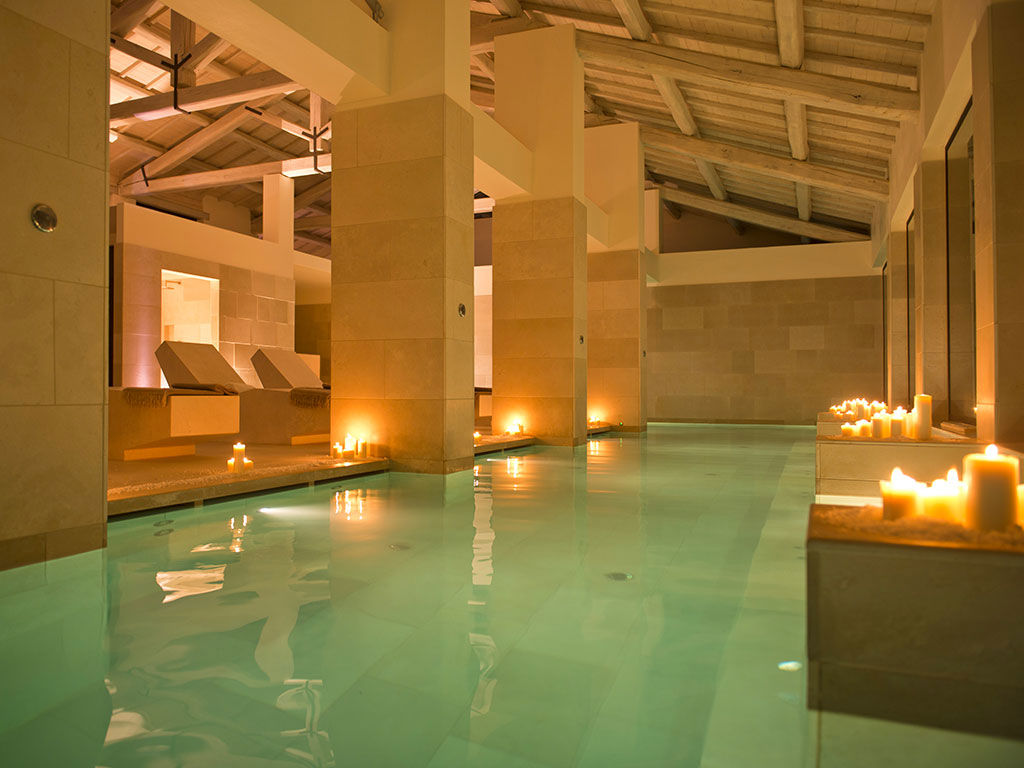
The Relais Histò, on the Mar Piccolo lagoon near Taranto, is one example. It includes a fortified masseria, but the site is much older: Greek quarry faces that, according to archaeological research, supplied stone for the walls of ancient Taras, a private Roman aqueduct over two thousand years old, rock-cut caves and a basilica. The site passed into private hands on 11 December 1536, became a fortified masseria in the centuries that followed and took on its noble appearance in the 18th century. It is not a farmhouse converted into a hotel but a layered historic estate, which is why its name, Histò, comes from Historia. Its story is told on our history page.
What it shares with the masserie is the land around it: 150 hectares of centuries old olive groves, kitchen gardens and old droving tracks, where the owners have planted around 9,000 new olive trees alongside carob, oak and cypress trees. The kitchen garden covers around 90% of what the La Lanternaia restaurant needs, and the restaurant itself occupies what was once the estate's oil mill.
Frequently asked questions about masserie
What is a masseria in Italy?
A masseria is a farm estate of southern Italy, especially Puglia, made up of the owners' house, workers' quarters, stables and storerooms inside a single enclosure, often fortified. Many have been restored as hotels.
How do you pronounce masseria?
Mahs-seh-REE-ah, with the stress on the I. The plural is masserie, pronounced mahs-seh-REE-eh.
What is the difference between a villa and a masseria?
A villa was built mainly as a residence, while a masseria was built to run a farm, with the house as one part of a working estate.
Is a trullo a masseria?
No. A trullo is a single conical stone building, while a masseria is a whole estate that may include trulli among its buildings.
What food is served in a masseria?
Usually the food of the area, often made with the estate's own produce: local cheeses and focaccia at breakfast, orecchiette, garden vegetables and olive oil at dinner, and seafood near the coast.
Do you need a car to stay in a masseria?
In most cases yes. Masserie are in the countryside, so a car or a transfer is the easiest way to reach them and to visit the towns around.
Stay in a historic estate on the Mar Piccolo
If the idea of a masseria appeals but you want more than a farmhouse, look at the rooms and suites of the Relais Histò, between the old building and the cloister. Browse our stay offers and plan your days among the olive groves of the Mar Piccolo.