eng
Gift voucher
Puglia is famous for the trulli of Alberobello, the white towns of the Itria Valley, the baroque stone of Lecce and a coastline on two seas. It produces almost half of Italy's olive oil, it is the home of orecchiette, burrata and Primitivo wine, and it is a land whose Greek past still shows in cities like Taranto. This guide explains the twelve things the region is best known for, and how to experience them.
Key points
The trulli are Puglia's signature: small white buildings of dry stone with conical roofs, clustered in Alberobello and scattered across the countryside of the Itria Valley, among dry stone walls and olive groves. Alberobello, the capital of the trulli, is a UNESCO World Heritage Site.
Visit early in the day or out of season to see the town at its quietest. At the Relais Histò there is a trullo inside the spa: saved during the restoration, it now houses the Grotta del Fuoco, the warm final stage of the spa journey.
Around Alberobello, the Itria Valley is dotted with whitewashed hill towns. Ostuni, the white town, looks out over olive groves towards the sea; Locorotondo and Martina Franca complete the circuit. This is the Puglia most visitors recognise from photographs, and it is compact enough to explore in a day.
Lecce is known as the city of baroque, where the local stone is carved like lace on church facades. It deserves a full day, ideally starting early in the morning, and it is the gateway to the Salento, the southern tip of the region.
Of the roughly 250,000 tonnes of olive oil produced in Italy in 2024, about 45% came from Puglia alone, and olive groves are the backdrop of the whole region, many of them made of monumental, centuries-old trees. The region has several PDO oils, including Collina di Brindisi, Dauno, Terra di Bari and Terra d'Otranto, the latter produced in the province of Lecce and in many municipalities around Taranto.
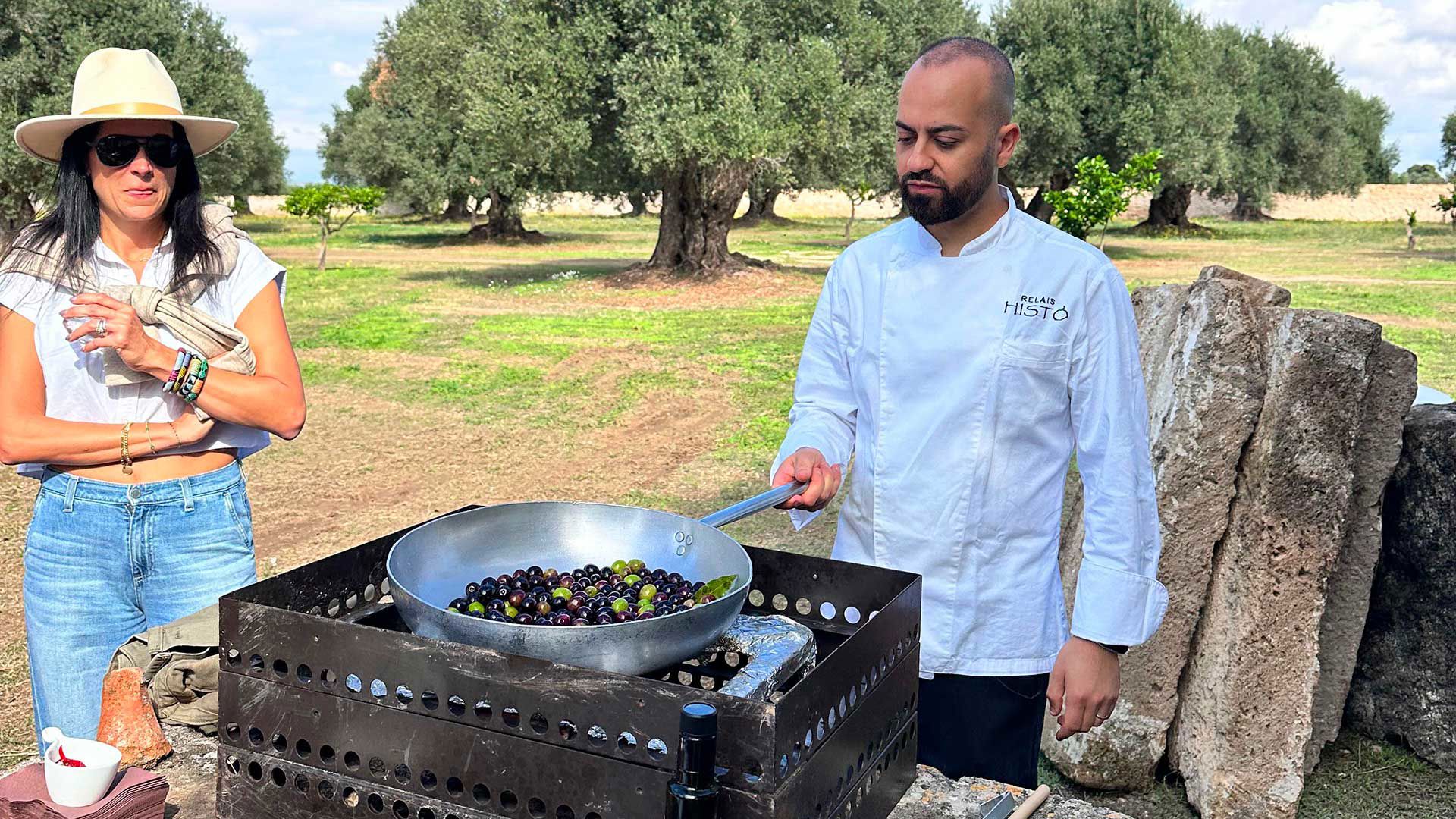
At the Relais Histò, alongside the centuries-old olive trees already on the estate, the owners have planted around 9,000 new ones, together with several hundred carob, oak and cypress trees. In autumn guests can walk among the olive trees of the sea-view grove, pick olives and join a tasting.
Puglian food is simple, seasonal and generous. Orecchiette, the small ear-shaped pasta, are made by hand; focaccia, panzerotti and capocollo from Martina Franca are staples; and the cheeses range from aged caciocavallo to fresh stracciatella. Near the sea, raw seafood and fried fish complete the table.
Every area has its own dish. In Taranto it is tubettini with Mar Piccolo mussels, short pasta cooked in the mussel liquor with cherry tomatoes, garlic, parsley and Puglian extra virgin olive oil, served at La Lanternaia restaurant in its traditional version. Guests who want to learn can join a cooking class and make orecchiette by hand with vegetables from the estate's kitchen garden.
Puglia is dairy country. Mozzarella and burrata are made early in the morning, and watching them being stretched by hand and tasting them still warm is one of the region's small pleasures. The best time to visit a dairy is at dawn, when the day's cheese is being made.
Puglia's best known red wines are Primitivo and Negroamaro. Around Taranto, the historic cellars are carved into the calcarenite, the soft local stone, where the temperature stays constant all year. A guided tasting with a sommelier, from structured Primitivo to the whites of the coast, is the easiest way to understand the grapes and how they pair with local food.
Puglia stretches along the heel of Italy, with the Adriatic on one side and the Ionian on the other. On the Adriatic side, Polignano a Mare looks out over the sea from its cliffs, 66 km from the Relais Histò. On the Ionian side, sheltered coves watched over by coastal towers and edged with Mediterranean scrub alternate with long sandy beaches, where wooden walkways cross the dunes and the water is clear and shallow.
Taranto adds a third body of water: the Mar Piccolo, a lagoon fed by 34 underwater freshwater springs and a regional park since 2020. Between the open Mar Grande and the enclosed lagoon, Taranto is known as the city of two seas. In the Gulf of Taranto a resident population of dolphins can be seen on catamaran trips.
Long before Rome, the coasts of southern Italy were settled by Greeks, and this Greek south became known as Magna Graecia. Taranto, founded as Taras, was one of its leading cities. Its National Archaeological Museum, the MArTA, holds one of the most important collections of Magna Graecia goldwork, and a Doric temple still stands in the old town. Read more in our guide to Taranto, the city of two seas.
The Greek heritage is not only in museums. On the hill above the Mar Piccolo where the Relais Histò stands, Greek quarry faces are still visible: according to the archaeologist Silvia De Vitis, the stone cut here supplied the building works of the walls and acropolis of Taras. It is why the Relais describes itself with the line "where Puglia speaks Greek".
Puglia's countryside is dotted with masserie, the historic farm estates of the region, some of them fortified, and many of them are now places to stay. Some, however, are much older than the farms they became. The Relais Histò, for instance, is not a farmhouse converted into a hotel but a layered historic complex, with Greek quarries, a Roman aqueduct more than two thousand years old, caves, a tenth century basilica and a fortified estate, brought back to life through a long restoration. Our guide to luxury hotels in Puglia explains how to choose between the different types of stay.
Three more names come up in almost every Puglia itinerary. Bari, the regional capital, was historically a great maritime centre linking East and West, and today it is known for its seafront promenade and its old town. Castel del Monte, the fortress near Andria, is another of the region's UNESCO sites. Matera, with its old town carved into the rock, lies just across the border in Basilicata, but it is so close that it is usually visited from Puglia: it is 90 km from the Relais Histò.
Puglia's traditions are still part of daily life. In Taranto, Holy Week is one of the most heartfelt moments of the year, with confraternities walking the old town in slow processions; on Good Friday the procession of the Misteri leaves the church of the Carmine in the afternoon and returns only the following morning. In the Salento, the music and dance of the pizzica and the tradition of the taranta come together at the Notte della Taranta festival.
The main airports are Bari and Brindisi. From the Relais Histò, near Taranto, Brindisi airport is 68 km away and Bari airport 120 km; Grottaglie, 17 km away, handles private flights. A car is the most practical way to move between towns, and airport shuttles can be arranged.
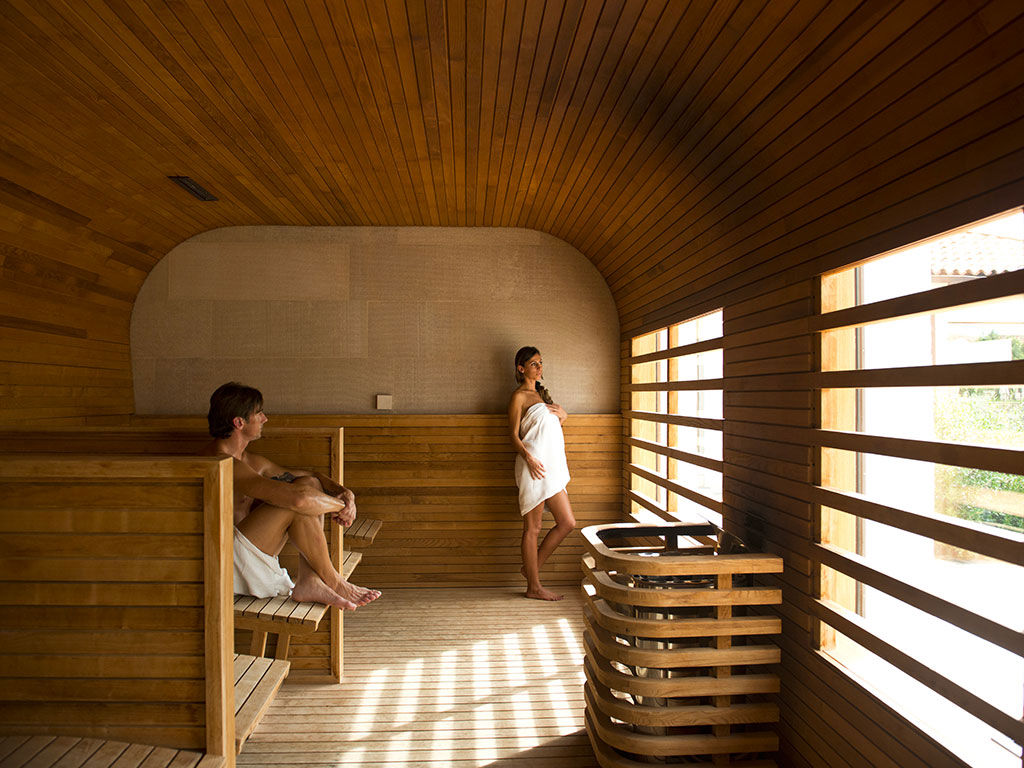
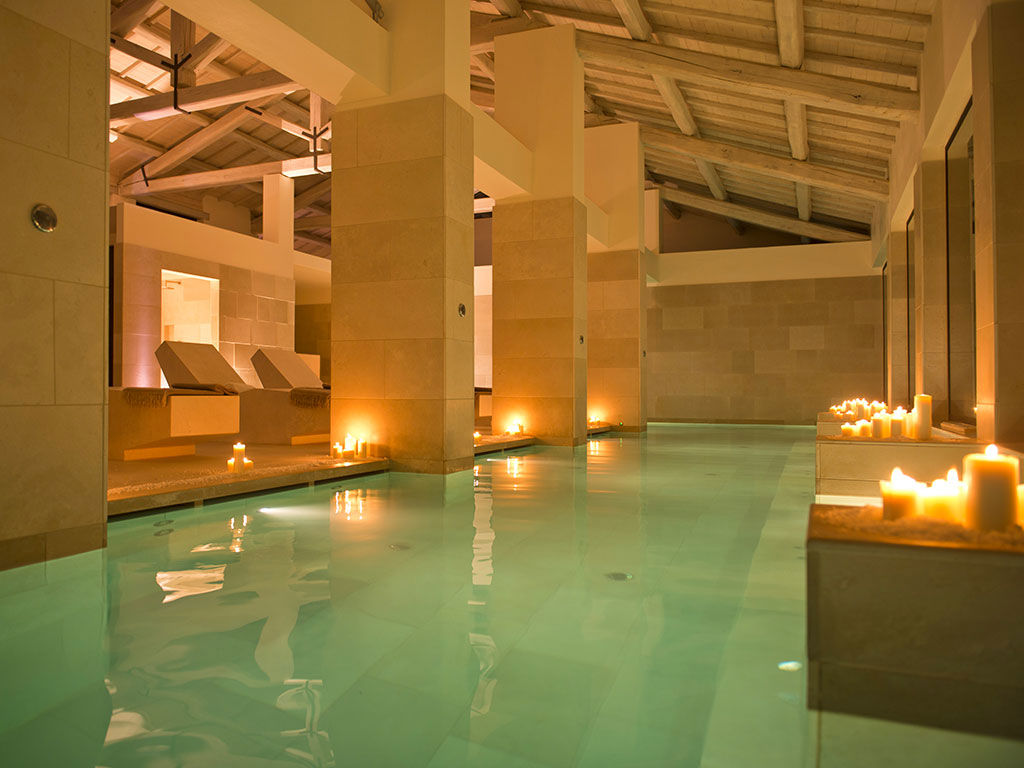
Taranto sits in a central position within Puglia, with the Itria Valley and the white towns to the north, Lecce and the Salento to the south-east and Matera to the west. The Relais Histò, San Pietro sul Mar Piccolo stands on a 150 hectare estate of centuries-old olive groves and kitchen gardens, looking directly onto the lagoon, 14 km from Taranto. After a day on the road, its 1,750 square metre spa is the best way to slow down. More ideas for the area are on our page about what to do near Taranto.
Puglia is best known for the trulli of Alberobello, the white towns of the Itria Valley, baroque Lecce, its coastline on the Adriatic and Ionian seas, olive oil, orecchiette and burrata, and Primitivo wine.
Orecchiette, focaccia, panzerotti, burrata and mozzarella, capocollo from Martina Franca and fresh seafood. In Taranto the signature dish is tubettini with Mar Piccolo mussels.
Primitivo and Negroamaro, the region's two best known red grapes. Around Taranto many historic cellars are carved into the local stone.
Yes. In one region you find UNESCO sites, baroque cities, two seas, a strong food and wine culture and a Greek heritage still visible in its cities.
Bari and Brindisi are the main airports. From the Relais Histò near Taranto, Brindisi airport is 68 km away and Bari airport 120 km.
No. Matera is in Basilicata, just across the regional border, but it is close enough to be visited from Puglia: 90 km from the Relais Histò.
The best way to understand what Puglia is famous for is to taste, walk and see it from a place with three thousand years of history. Browse our stay offers and plan your first trip to the region.