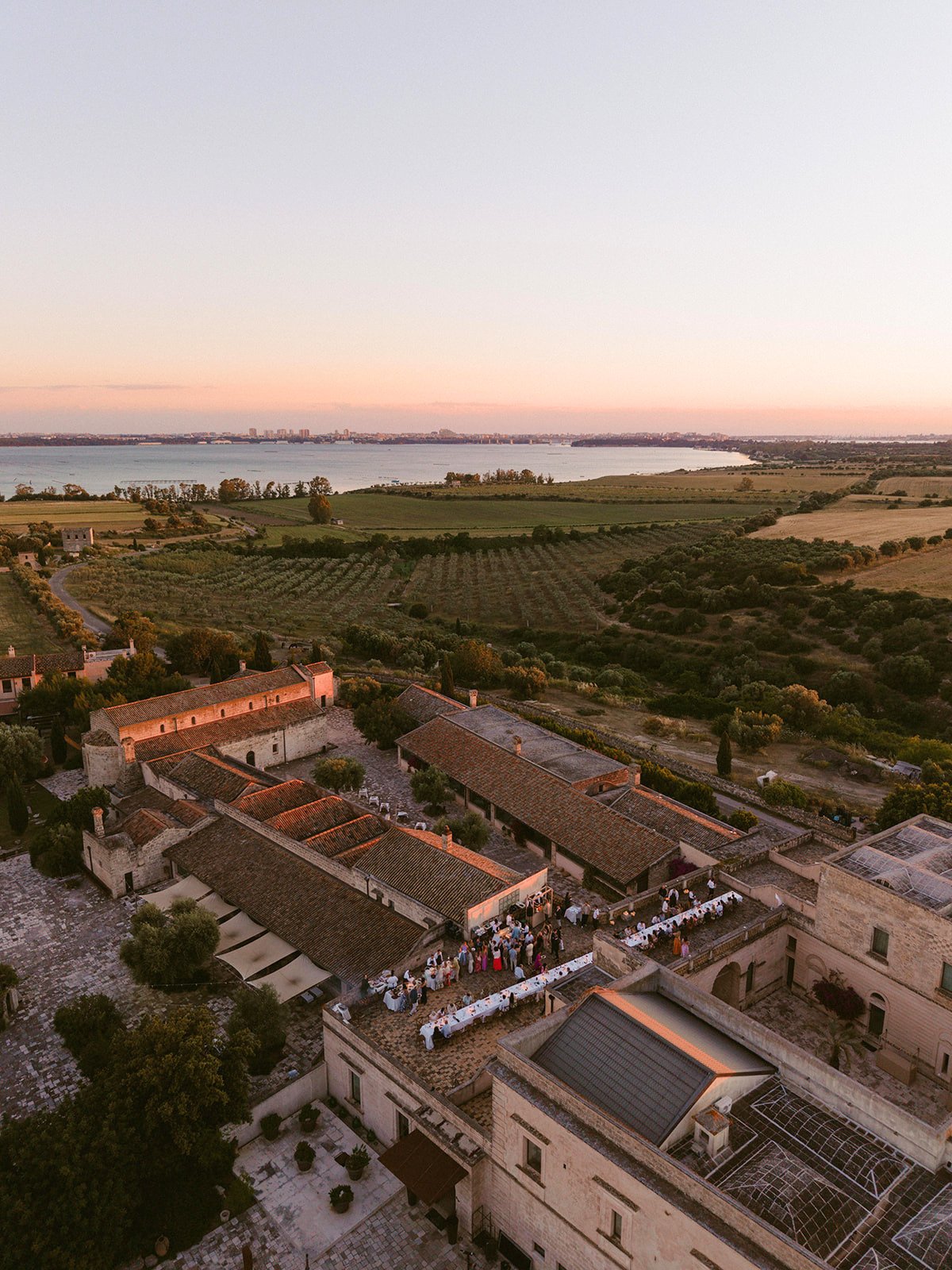
The Relais Histò is a five star historic luxury hotel in Puglia, set on a stone hill above the Mar Piccolo lagoon, 14 km from Taranto. Guests sleep under the vaults of an estate that took its noble form in the 18th century, unwind in a spa built around an old trullo and eat what grows in the estate's own garden. This guide explains what a stay is like, from the rooms to the experiences on the estate.
Key points
- The Relais Histò is not a farmhouse converted into a hotel but a layered historic estate.
- Rooms and suites are divided between the noble residence, with its cross vaults and tuff-stone walls, and a newer wing built in the same style.
- Horse rides to the lagoon, cooking classes and a sound bath in the basilica can all be enjoyed without leaving the estate.
- At La Lanternaia, in the old oil mill, the estate's garden covers about 90% of the kitchen's needs.
- Today the estate has 48 rooms and suites, a 2,000 square metre spa and 150 hectares of land on the lagoon.
What makes the Relais Histò different
In Puglia many luxury hotels are restored masserie, the fortified farm estates of the countryside. The Relais Histò includes one, but it did not begin as a farm. It is a layered historic site, made of Greek quarry faces, a Roman aqueduct, rock-cut caves, a basilica and a fortified estate, brought back to life by a restoration that lasted years.
Three things set it apart from most historic hotels in the region: the depth of its history, which in the site as a whole goes back more than three thousand years; its position on the Mar Piccolo, a lagoon very few properties look directly onto; and the way its restoration chose to protect the place rather than make the most of it.
Three thousand years in brief
The history of the site goes back more than three thousand years. Greek quarry faces on the estate supplied stone for the walls of ancient Taras, a private Roman aqueduct over two thousand years old runs beneath the buildings, and a basilica where Latin and Greek rites once coexisted still stands at the heart of the complex. In the following centuries the site became a fortified masseria, and in the 18th century it took on the noble appearance that guests see today. Its name, Histò, comes from Historia.
Giovanni Colomba bought the property in 1994 and the first part of the hotel opened in 2008, after a long restoration. Two of its choices still shape a stay: the cloister was built lower than planned, so as not to stand taller than the basilica, and the number of rooms was kept below what had been authorised, to keep the estate quiet. The full story, from the Greek quarries to the restoration, is told on our page about the history of the estate.
The rooms and suites
Staying in a historic estate means living inside its architecture. The 48 rooms and suites, 7 of them suites, are spread between the old building and the cloister, and the noble rooms in the Villa Nobile and next to the basilica look onto the Giardino Nobile, the Corte della Palma and the Corte degli Ulivi.
The noble residence keeps its original cross vaults and tuff-stone walls, and the newer wing follows the same traditional style. The interiors, overseen by Alessandro Agrati, founder of Culti, are deliberately simple: clean, minimalist furnishings, bright spaces and wooden details. Some suites overlook the Mar Piccolo, while others are set in quieter, more secluded corners of the estate.
The spa: Roman baths around a trullo
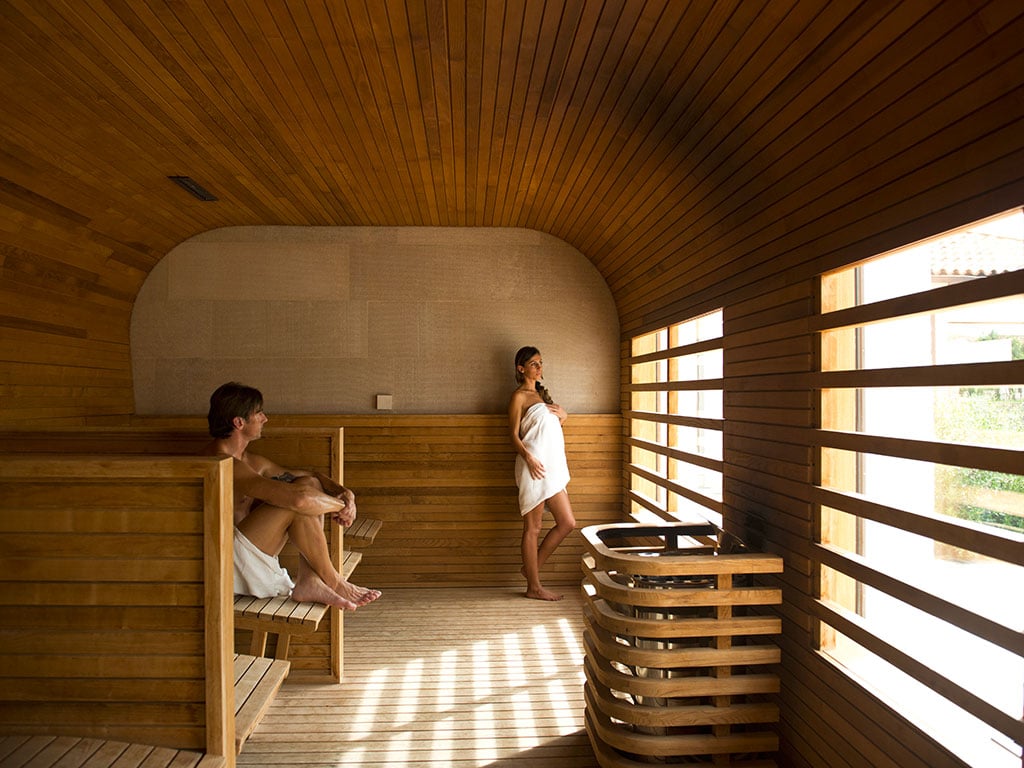
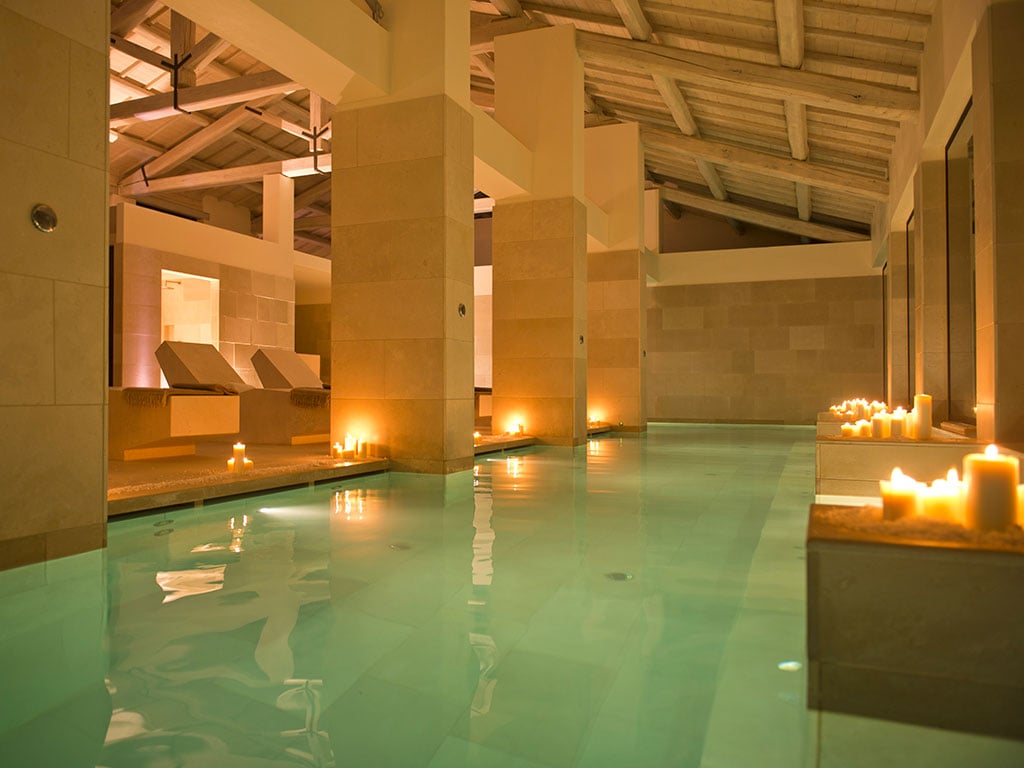
The spa covers 2,000 square metres and was built where the old sheepfold and shepherd's quarters stood. Its Roman Baths path ends in the Grotta del Fuoco, the trullo that was saved during the restoration.
The path takes about 100 minutes. It moves from the Mare Secco sauna and the Mare di Vapore steam bath to the Impluvium, with its neck jets, and the salt-water Laguna, rich in magnesium and potassium, then to the Sorgente, a heated salt-water pool that leads from inside to the open air. Rituals, massages and facial treatments complete the experience.
Dining at La Lanternaia
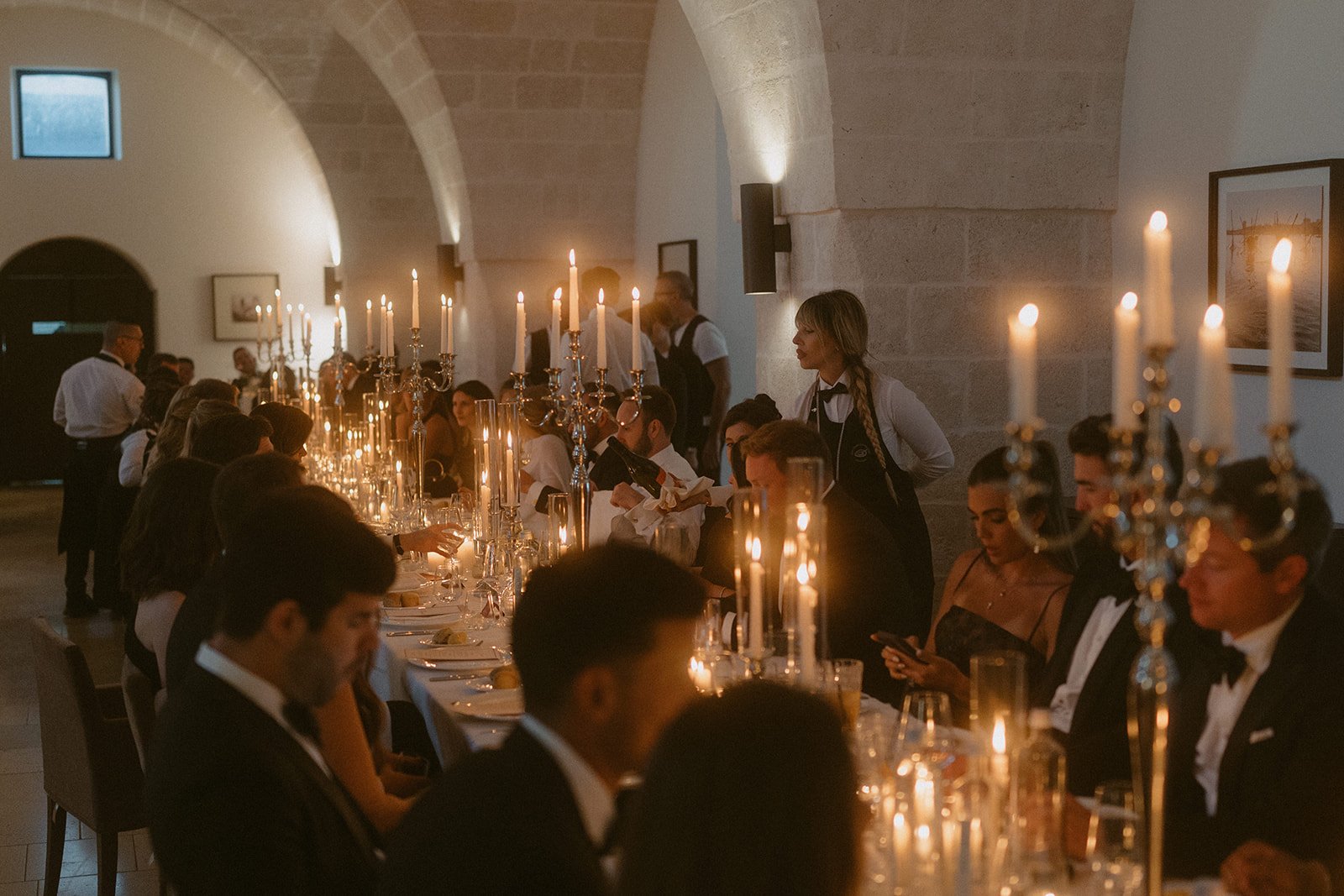
Meals are served at La Lanternaia restaurant, in what was once the estate's oil mill. The kitchen works almost entirely with what grows within a few kilometres: the estate's own garden covers about 90% of its needs, the olive oil comes from the estate's own groves, and the menu follows the Ionian side of Puglia, from Mar Piccolo seafood to fish from the Ionian Sea.
Things to do on the estate
There is plenty to do without leaving the property. These are the experiences that make the most of it:
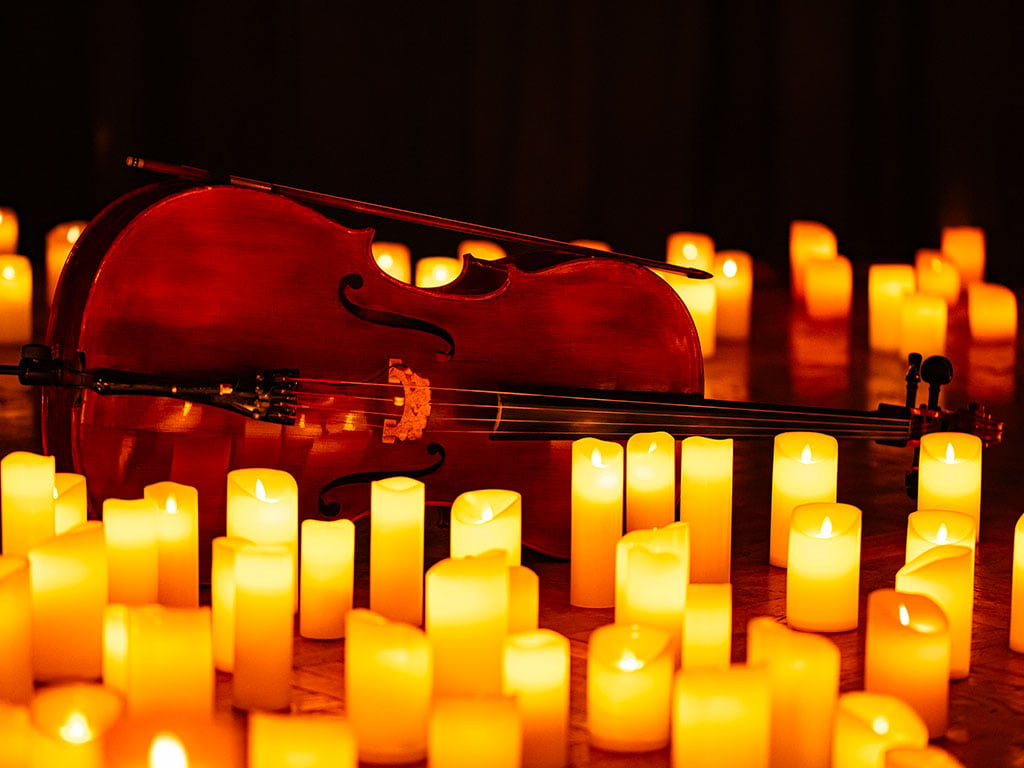
- A sound bath in the basilica, where gongs and Tibetan bowls resonate with the natural acoustics of the stone.
- A ride on horseback down to the shore of the lagoon, where the horses walk into the water.
- A cooking class with the chefs, using vegetables picked that morning in the garden.
- A walk through the ancient olive grove facing the sea, enclosed by an old Greek wall.
- A bike ride along the old droving tracks and the route of the Via Appia, easy enough for occasional cyclists.
- A guided wine tasting with the sommelier, from structured Primitivo to the white wines of the coast.
- The Notte nel Trullo, an exclusive candlelit evening in the spa for 2 to 10 people.
For ideas beyond the estate, from Taranto to the Itria Valley, see our page on what to do near Taranto.
A stay in every season
The Relais Histò is open all year, and each season changes the rhythm of a stay. In the warm months days are spent between the outdoor pool and its solarium, the courtyards and the olive groves, with the sunset over the lagoon to close them. In autumn and winter the spa, the kitchen and the quiet of the Mar Piccolo take centre stage. Our guide to Puglia in winter explains what the region offers in the colder months.
Where it is
The Mar Piccolo is the inner lagoon of Taranto, fed by 34 underwater freshwater springs and protected as a regional park since 2020. The Relais Histò is one of the very few properties that look directly onto it.
The estate is also central to Puglia. Taranto is 14 km away, Martina Franca 27 km, Alberobello 42 km, Ostuni 52 km, Matera 90 km and Lecce 101 km, while the airports of Brindisi and Bari are 67 km and 93 km away. For the city itself, read our guide to Taranto, the city of two seas.
Frequently asked questions about the Relais Histò
What makes the Relais Histò special?
It is a layered historic estate rather than a converted farmhouse, with Greek quarries, a Roman aqueduct, a basilica and an 18th-century noble palace, set directly on the Mar Piccolo lagoon near Taranto.
What is the spa like at the Relais Histò?
The spa covers 2,000 square metres and is built around a trullo. Its Roman Baths path, about 100 minutes long, moves from sauna and steam bath to heated salt-water pools and ends in the Grotta del Fuoco.
Is the Relais Histò a masseria?
Not exactly. It includes a fortified masseria, but it is a much older historic site that also contains Greek quarries, a Roman aqueduct, caves and a basilica.
Is there a restaurant at the Relais Histò?
Yes. La Lanternaia, in the estate's old oil mill, cooks mainly with local produce: the estate's own garden covers about 90% of the kitchen's needs.
Where is the Relais Histò?
On a hill above the Mar Piccolo lagoon, 14 km from the centre of Taranto, in Puglia.
Is the Relais Histò open all year?
Yes, the Relais Histò is open all year.
Stay in a historic estate on the Mar Piccolo
Reading about the Relais Histò is one way to get to know it; living in it for a few days is another. Contact us to tailor your stay, or browse our stay offers to plan your visit.